

Smart Construction
Artificial Intelligence is entering a different phase. For several years, the conversation focused on what AI could generate. Today, the more important question is: What can AI operate?
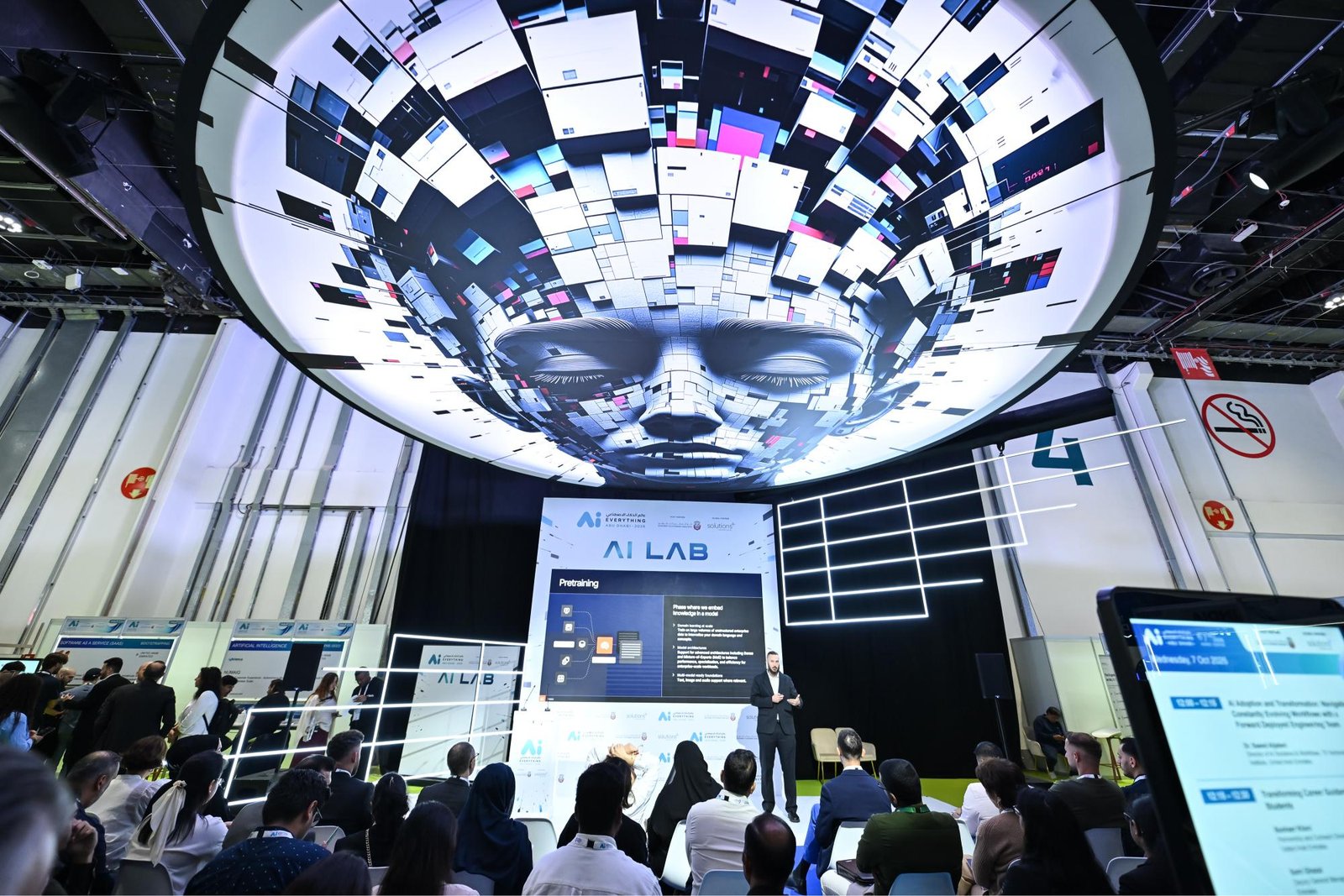
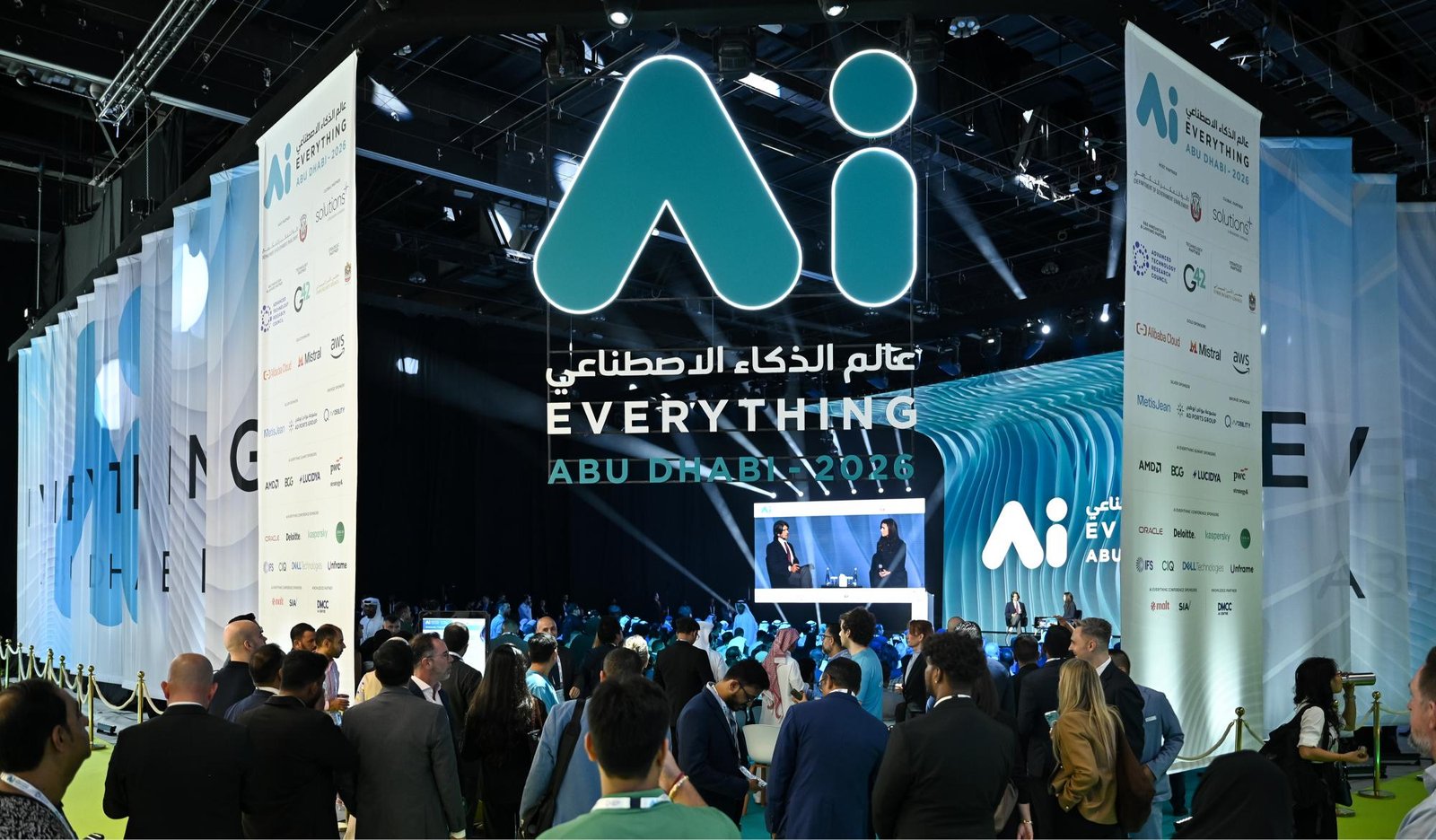
That shift was one of the strongest messages emerging from AI Everything Abu Dhabi 2026, where government leaders, technology companies, enterprises, investors, and innovators gathered in Abu Dhabi to explore how artificial intelligence is moving beyond experimentation into real-world systems, infrastructure, and services.
For Al Ain Consulting Engineers (ACE), this transition is particularly relevant. The future opportunity is not simply to use AI to produce faster documents, better presentations, or smarter models. It is to build intelligent workflows that can connect information, automate processes, support decision-making, and progressively transform how engineering, construction, infrastructure, government services, and other complex industries operate.

From AI Assistance to AI-Native Workflows
Much of the first generation of enterprise AI focused on assistance: drafting, summarizing, searching, generating content, and analyzing data. These capabilities remain valuable, but the emerging generation of AI goes significantly further.
From Assistance to Operations
AI agents can increasingly interact with systems, coordinate tasks, monitor information, initiate actions, and support complex workflows across multiple platforms. At AI Everything Abu Dhabi, this idea appeared throughout the programme, particularly in discussions around agentic AI, AI-native government, intelligent operations, and enterprise-wide deployment.
A New Question for Organizations
This changes the nature of digital transformation. Instead of asking where AI can support an employee, organizations can begin asking: Which workflows can become intelligent by design?
Government as an Intelligent Operating Environment
The transformation of government was one of the most important themes of the event. The AI Government Excellence Forum focused on how governments can move from isolated AI tools toward agentic systems, interoperable platforms, intelligent public services, and AI-native institutional models.
Connecting Project and Regulatory Processes
This direction is particularly significant in Abu Dhabi, where the ambition to develop increasingly intelligent government services is already shaping the wider digital ecosystem. For the engineering and construction industry, this creates an important opportunity.
A significant part of project delivery depends on interaction with government systems and regulatory processes, including submissions, approvals, technical reviews, data validation, authority requirements, permits, project information, compliance, and ongoing coordination. These activities can be complex because information moves between multiple stakeholders, systems, and disciplines.
Making the Process More Intelligent
The next generation of AI could help make those workflows more connected. Rather than treating each submission, document, or review as an isolated transaction, intelligent systems can progressively support information validation, requirements checking, document preparation, tracking, routing, and decision support.
The opportunity is not simply to automate individual tasks. It is to make the entire process more intelligent.
Engineering and Construction: From Digital Delivery to Intelligent Delivery
The architecture, engineering, and construction industry already generates enormous quantities of structured and unstructured information: BIM models, drawings, specifications, schedules, costs, authority comments, RFIs, submittals, site reports, progress data, contracts, and meeting records.
Connecting Project Information
Much of this information still requires significant manual interpretation and movement between different systems. AI creates the possibility of connecting these information layers more effectively.
Supporting the Project Team
An intelligent workflow could help:
- Identify missing information before submission.
- Compare project requirements against design outputs.
- Organize technical comments automatically.
- Support multidisciplinary coordination.
- Analyze programme risks and structure site information.
- Help teams focus attention where professional judgment is required.
This is where AI becomes far more than a productivity tool. It becomes part of the project-delivery infrastructure itself.

Scaling Intelligence to Master Planning and Infrastructure
Master planning and infrastructure involve complex relationships between land use, mobility, utilities, population, environment, phasing, investment, public services, and long-term development strategy. Traditionally, each layer is often analyzed through separate specialist tools and disciplines.
A More Connected Planning Environment
AI provides an opportunity to connect those layers more dynamically. Future intelligent planning environments could support scenario analysis across multiple development options, evaluate infrastructure demand, assist with mobility patterns, compare development scenarios against planning requirements, and organize environmental, spatial, technical, and commercial data into a more unified decision environment.
Supporting Professional Judgment
This does not replace planners or engineers. It creates a stronger platform for them to work from. For large-scale city and infrastructure development, the value of AI may lie less in generating an individual design and more in helping decision-makers understand how thousands of interconnected decisions affect one another.
The Physical World Is Becoming Intelligent
AI Everything Abu Dhabi also highlighted the growing importance of physical AI — where AI moves beyond software and begins interacting directly with infrastructure, machines, mobility systems, robotics, and the built environment. The event’s physical-AI themes included smart infrastructure, autonomous systems, AI-enabled sensors, computer vision, and real-world deployment.
Infrastructure That Can Sense and Respond
Buildings and infrastructure are increasingly capable of generating continuous data. Sensors can monitor performance, computer vision can support inspection, digital twins can represent physical assets, and AI can help interpret the information generated by those environments.
The result is a gradual transition from infrastructure that is simply built to infrastructure that can increasingly sense, analyze, respond, and improve.
Healthcare Shows What Intelligent Workflows Can Become
One of the most interesting lessons from AI Everything Abu Dhabi came from healthcare. The event showcased AI applications spanning clinical documentation, patient safety, drug discovery, operational efficiency, and digital-health platforms. One Arabic-first clinical workflow system demonstrated how AI can convert natural patient consultations into structured clinical documentation, reducing administrative workload while supporting frontline healthcare professionals.
Removing Friction Around Expertise
This is important beyond healthcare itself. It illustrates a wider principle: the most valuable AI applications often remove friction around expertise rather than replace it.
- A doctor should spend more time with patients.
- An engineer should spend more time solving engineering problems.
- A planner should spend more time evaluating the future of a city.
- A project manager should spend more time managing risks and decisions.
AI can increasingly absorb parts of the administrative and informational burden surrounding these professionals. That is where workflow automation becomes transformational.
One Principle Across Different Industries
Government, engineering, construction, infrastructure, master planning, and healthcare may appear very different. But from a digital-transformation perspective, many of their challenges are surprisingly similar.
Shared Workflow Challenges
- Large volumes of information.
- Multiple stakeholders and complex approval processes.
- Specialist professional judgment and regulated environments.
- Repetitive administrative activity and the need for clear accountability.
A Common Intelligence Layer
The underlying intelligence layer can often follow the same logic:
- Capture information.
- Understand context and apply rules.
- Coordinate actions and highlight exceptions.
- Support decisions while maintaining human accountability.
The industry changes. The principle remains.
ACE’s Direction: From Using AI to Building Intelligent Workflows
For ACE, this represents an important evolution in our own digital-transformation journey. Our focus is increasingly moving beyond the use of individual AI applications toward understanding how intelligent workflows can be designed around real business and industry processes.
Applying Intelligence to Real Processes
This includes opportunities to support engineering and construction workflows, improve interaction with government processes, automate selected recurring activities, and progressively scale intelligent systems toward master planning, infrastructure, and other complex sectors.
Keeping Expertise at the Center
The objective is not to automate everything or to remove professional expertise from the process. It is to identify where people are spending time moving information rather than applying knowledge — and redesign those workflows so technology can support them more effectively.
From Digital Transformation to Intelligent Operations
The next wave of AI will not be defined by how many organizations have access to an AI model. Access is becoming universal. The real difference will be how intelligently organizations integrate AI into their operations.
Integrating AI into the Organization
Organizations that connect AI with structured data, clear governance, existing systems, professional knowledge, and measurable business needs will create significantly more value than those that treat AI as an isolated tool.
From Experimentation to Infrastructure
This was one of the clearest lessons from AI Everything Abu Dhabi: the world is moving from AI experimentation to AI infrastructure; from isolated prompts to intelligent workflows; from software assistance to agentic operations; and from digital organizations to increasingly AI-native ones.
For ACE, the opportunity is equally clear. The next generation of engineering will not simply use intelligence. It will be built around it.